Ever notice a chorus that sounds polished but the verses feel clunky? When lyrics aren’t as effortless as the melody, the whole track loses impact. Below are concrete ways to spot the friction, tighten the wording, and make every line sing.
Spotting the Rough Spots
Start with a quick read‑aloud test. If you stumble over a phrase or need to pause for breath, that line is likely the culprit. Another red flag is a mismatch between syllable count and the beat—listen for extra clicks or rushed words. In Olivia Rodrigo’s “Good 4 U,” the pre‑chorus maintains a tight rhythmic flow, while some of the bridge lines feel forced, pulling the listener out of the moment.
Streamline with the “One‑Word Rule”
Challenge yourself to convey an idea in a single, vivid word instead of a phrase. Replace “I’m feeling really sad about us breaking up” with “Heartbreak.” The fewer words you use, the more room the melody has to breathe. This technique is evident in Taylor Swift’s lyric sheets, where she often pares down a sentiment to a striking noun or verb, letting the music carry the emotion.
Use Real‑World References for Authenticity
Specific details anchor a song in reality and reduce vague filler. Instead of “I was walking down the street,” try “I was on 5th Avenue at 2 a.m.” The concrete image feels effortless because it doesn’t require the listener to fill gaps. Olivia Rodrigo’s verses succeed when she drops a single, relatable detail—like a “red‑light traffic jam”—that instantly paints a scene.
Image: Olivia Rodrigo “Good 4 U” Lyric Sheet

Notice how the chorus aligns each syllable with the drum hit, creating a seamless flow. Replicate that alignment by counting beats per line and trimming any extra words that don’t land on a downbeat.
Leverage Repetition Wisely
A well‑placed repeat can smooth a rough line, but overuse creates monotony. Identify the phrase that feels most natural and echo it once or twice in the same section. In “Good 4 U,” the hook “You’re so… happy” repeats with slight variation, reinforcing the theme without adding new, awkward wording.
Image: Taylor Swift Wallpaper Featuring Lyric Art

This visual highlights how Swift balances line length, keeping each bar evenly spaced. Use a similar grid when drafting your verses: write the line, count the beats, and adjust until the words sit evenly within the musical bar.
Actionable Checklist for Effortless Lyrics
- Read aloud. Flag any phrase that trips you up.
- Count syllables. Match them to the track’s beat grid.
- Apply the one‑word rule. Replace multi‑word ideas with a single, strong term.
- Add concrete detail. Ground abstract feelings in specific images.
- Trim and repeat. Cut excess words and repeat the strongest line.
By auditing your verses with these steps, you’ll turn “lyrics not as effortless” into a smooth, memorable hook that complements any melody.
Ever notice a chorus that sounds polished but the verses feel clunky? When lyrics aren’t as effortless as the melody, the whole track loses impact. Below are concrete ways to spot the friction, tighten the wording, and make every line sing.
Spotting the Rough Spots
Start with a quick read‑aloud test. If you stumble over a phrase or need to pause for breath, that line is likely the culprit. Another red flag is a mismatch between syllable count and the beat—listen for extra clicks or rushed words. In Olivia Rodrigo’s “Good 4 U,” the pre‑chorus maintains a tight rhythmic flow, while some of the bridge lines feel forced, pulling the listener out of the moment.
Streamline with the “One‑Word Rule”
Challenge yourself to convey an idea in a single, vivid word instead of a phrase. Replace “I’m feeling really sad about us breaking up” with “Heartbreak.” The fewer words you use, the more room the melody has to breathe. This technique is evident in Taylor Swift’s lyric sheets, where she often pares down a sentiment to a striking noun or verb, letting the music carry the emotion.
Use Real‑World References for Authenticity
Specific details anchor a song in reality and reduce vague filler. Instead of “I was walking down the street,” try “I was on 5th Avenue at 2 a.m.” The concrete image feels effortless because it doesn’t require the listener to fill gaps. Olivia Rodrigo’s verses succeed when she drops a single, relatable detail—like a “red‑light traffic jam”—that instantly paints a scene.
Image: Olivia Rodrigo “Good 4 U” Lyric Sheet
Notice how the chorus aligns each syllable with the drum hit, creating a seamless flow. Replicate that alignment by counting beats per line and trimming any extra words that don’t land on a downbeat.
Leverage Repetition Wisely
A well‑placed repeat can smooth a rough line, but overuse creates monotony. Identify the phrase that feels most natural and echo it once or twice in the same section. In “Good 4 U,” the hook “You’re so… happy” repeats with slight variation, reinforcing the theme without adding new, awkward wording.
Image: Taylor Swift Wallpaper Featuring Lyric Art
This visual highlights how Swift balances line length, keeping each bar evenly spaced. Use a similar grid when drafting your verses: write the line, count the beats, and adjust until the words sit evenly within the musical bar.
Actionable Checklist for Effortless Lyrics
- Read aloud. Flag any phrase that trips you up.
- Count syllables. Match them to the track’s beat grid.
- Apply the one‑word rule. Replace multi‑word ideas with a single, strong term.
- Add concrete detail. Ground abstract feelings in specific images.
- Trim and repeat. Cut excess words and repeat the strongest line.
By auditing your verses with these steps, you’ll turn “lyrics not as effortless” into a smooth, memorable hook that complements any melody.
Blank Space - Taylor Swift - Blank Space Lyrics [Verse 1] Nice To Meet
![Blank Space - Taylor Swift - Blank Space Lyrics [Verse 1] Nice to meet](https://d20ohkaloyme4g.cloudfront.net/img/document_thumbnails/a1ea7128b19641aa05319fb962f87bbd/thumb_1200_1553.png)
Blank Space - Taylor Swift - Blank Space Lyrics [Verse 1] Nice to meet ...
Song Lyrics That Sound Like Poetry At Ruby Godfrey Blog
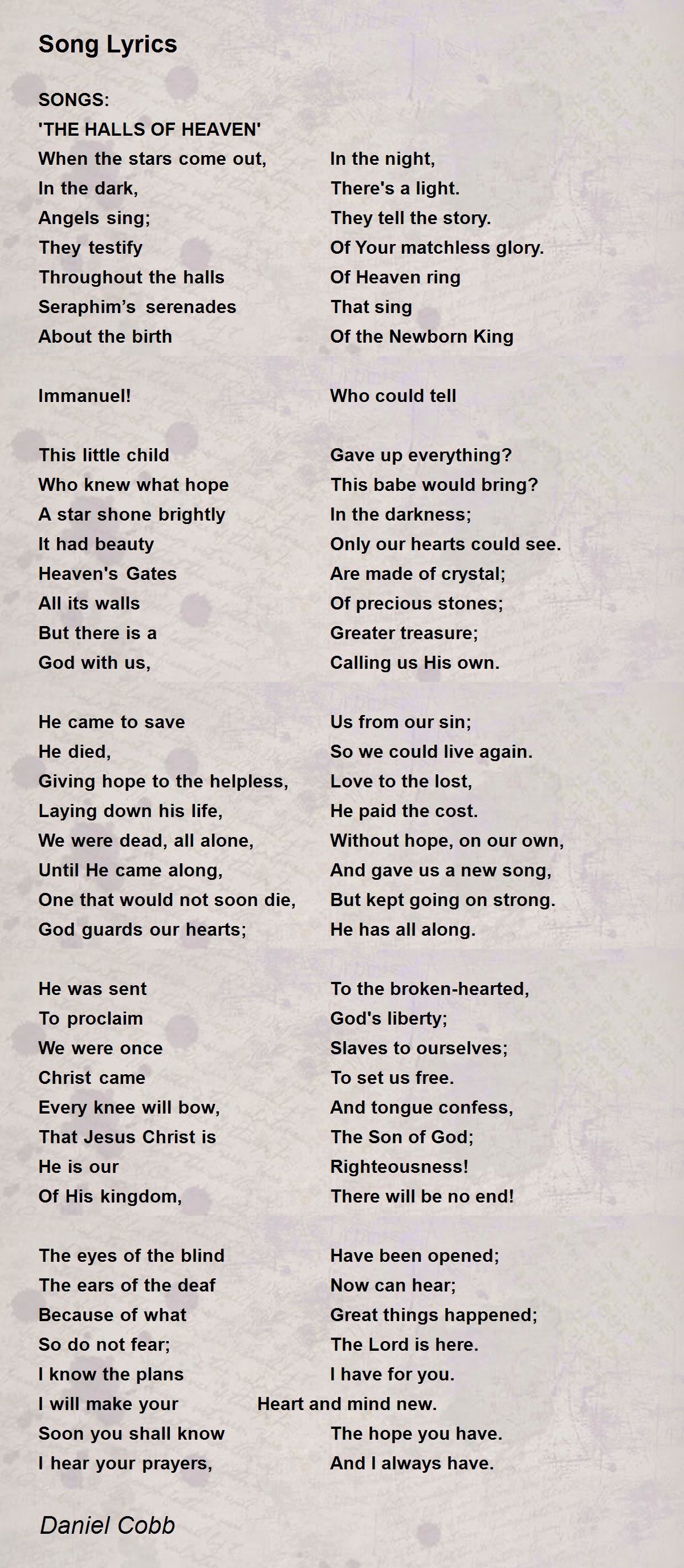
Song Lyrics That Sound Like Poetry at Ruby Godfrey blog
🔥 [100+] Lyrics Wallpapers | WallpaperSafari
![🔥 [100+] Lyrics Wallpapers | WallpaperSafari](https://cdn.wallpapersafari.com/97/2/EDy9KA.png)
🔥 [100+] Lyrics Wallpapers | WallpaperSafari